





Quick Summary
To host a wine tasting at home, pick one clear theme such as a region, grape or price tier, and choose six wines that show clear differences. Keep the guest list small, serve whites before reds and light wines before full ones, and pour small measures so every bottle can be judged fairly.
- Choose one theme: a region, a grape, or a price tier.
- Six bottles is a comfortable number for a first tasting.
- Serve whites before reds, and light wines before full ones.
- Pour small measures and give each wine a few minutes.
- A blind tasting covers bottles so guests guess from taste alone.
Table of Contents
- Plan the Theme, Wines and Guest List
- Run the Tasting: Serving Order, Pours and Timing
- Wine Tasting Party Ideas for a Blind Tasting at Home
- Frequently Asked Questions
Plan the Theme, Wines and Guest List
Last Updated: November 10, 2026
A good wine tasting party starts with one clear theme. Pick a region, a grape, or a style, then build every bottle around it. Wines from France makes this easy, since its collections are already grouped by region.
For a first tasting, six bottles is a comfortable number. Keep the guest list small enough that everyone can take part in the discussion. Browse Burgundy Wines for a regional focus, or start with a Rhone Cru Reds Six Different Wines set for a ready-made lineup.
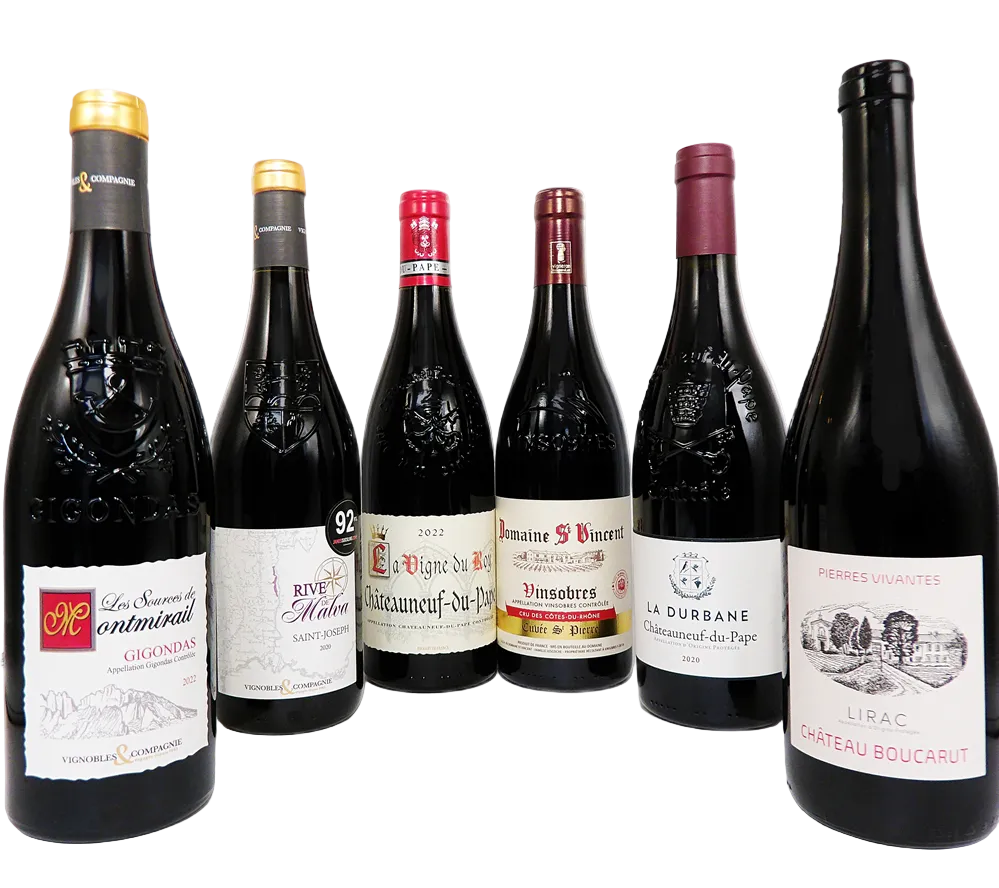
- Choose one theme: a region, a grape, or a price tier
- Pick six wines that show clear differences
- Keep the guest list small enough for conversation
- Plan a glass, a notepad and a water station per guest
For wine lovers who want a broader theme, five underrated French wine appellations make a good starting point.
Run the Tasting: Serving Order, Pours and Timing
Serve whites before reds, and light wines before full ones. This order keeps the palate fresh so each wine tastes clearly. Pour small measures so guests can taste several wines without fatigue.
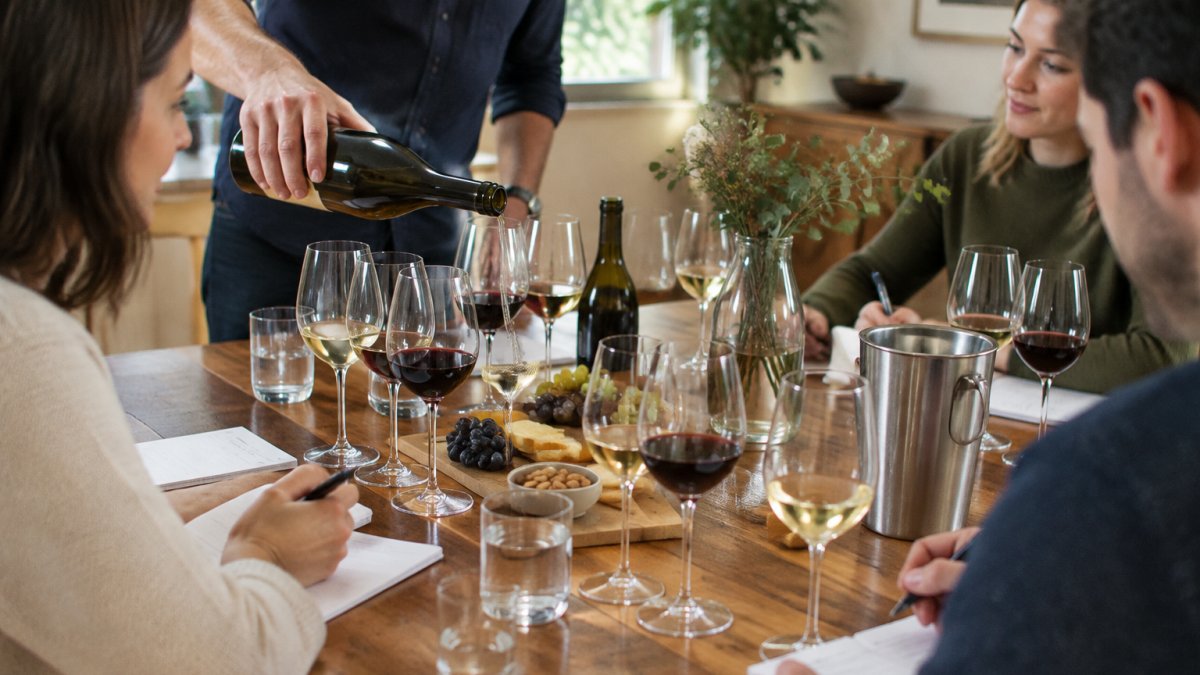
Give each wine a few minutes. Ask guests to look, smell and sip before they talk. A short tasting sheet keeps everyone focused.
Watch out: pouring full glasses too early makes the later wines hard to judge fairly.
The order of service and the pour sizes shape how fairly each wine can be judged.
| Step | What to do | Time or frequency |
|---|---|---|
| Serving order | Serve whites before reds, light before full | Throughout the tasting |
| Pour size | Pour small measures | Each wine |
| Tasting turn | Look, smell and sip before talking | A few minutes per wine |
| Tasting sheet | Keep guests focused | Used during the tasting |
Wine Tasting Party Ideas for a Blind Tasting at Home
A blind tasting adds fun to any evening. Wrap or cover the bottles so guests guess the region, grape or price from taste alone. Wines from France offers a France Six Different White Wines set that works well for this format.
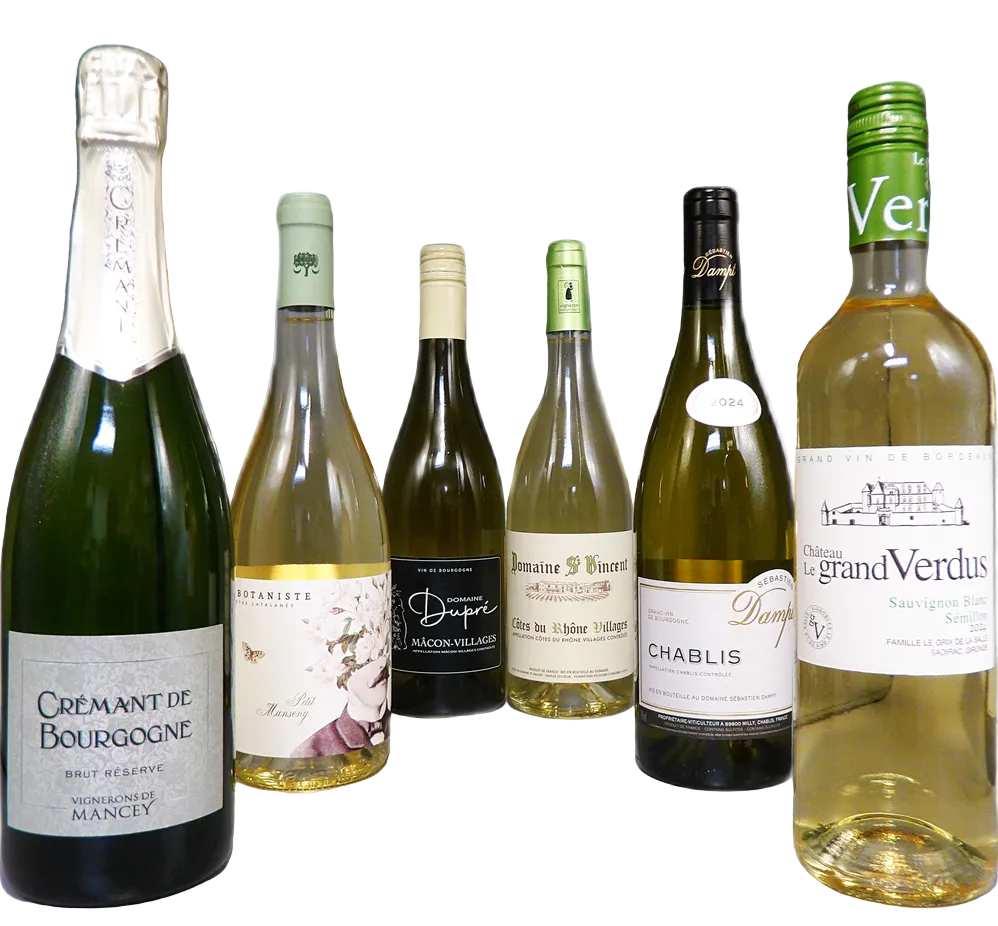
Wine tasting party ideas like this keep guests talking all night. Reveal the labels at the end and let each guest share which bottle surprised them most.
Frequently Asked Questions
How many wines should you serve at a wine tasting?
Most home tastings work well with three to six wines. Four is a comfortable number for guests who want to compare styles without palate fatigue. Serve wines from light to full-bodied, and pour small measures so each guest can taste several without becoming overwhelmed. A six-bottle French collection, such as the France Six Different White Wines set, gives you a ready-made flight of distinct regions to work from.
How long should a wine tasting party last?
Plan for about 90 minutes to two hours. That leaves time to introduce each wine, let guests taste, compare notes and discuss before moving on. Build in a short break with water and a light snack between flights if you pour more than four wines. Ending on time keeps the atmosphere convivial rather than tired.
What food should you serve at a wine tasting party?
Choose simple foods that do not overpower the wine: bread, mild cheeses, charcuterie and plain crackers work well. Include water and plain bread between pours as palate cleansers. Match foods to the wines where it helps, such as a creamy cheese with a white Burgundy, so guests can see how pairing changes the taste.
