





Last Updated: November 11, 2026
Quick Summary
Rare champagne bottles for collectors are valued for their source, condition and documented storage history. Start by confirming the producer and vintage or disgorgement date, then ask the seller how the bottle has been kept.
- Check the producer, the vintage or disgorgement date, and the storage history before buying.
- A good label does not prove good storage, so ask for the bottle's history first.
- The Champagne Gran Cuvée Blanc de Blancs by Marie Clugny is priced at $89.00 and is numbered.
- The Veuve Doussot Champagne L is priced at $69.00 and is a highly rated mid-range option.
- Compare old bottles against current retail price and known rarity, not the label alone.
Table of Contents
- Rare Champagne Bottles for Collectors: What Makes a Bottle Worth Buying
- The Most Valuable Champagne Bottles in Our Collection
- Buying Old Champagne Bottles and Checking Their Value and Condition
- Frequently Asked Questions
Rare Champagne Bottles for Collectors: What Makes a Bottle Worth Buying
Rare champagne bottles for collectors are valued for their source, their condition and the paper trail that proves where they have been. At Wines from France, we source directly from boutique wineries, so every bottle we list comes with a clear origin. Champagne is an appellation, which means the name is legally protected to wines made under strict rules in the Champagne region of France. Collectors should start there, then check the bottle itself.
Three things decide whether a bottle is worth buying: the producer, the vintage or disgorgement date, and how the bottle has been stored. A well-stored bottle from a reputable producer holds its value far better than a bright label on a bottle with an unknown history. The bottle you buy should match the story the seller tells about it.
Watch out: a label in good shape does not prove a bottle was cellared well. Ask for the storage history before you pay.
The Most Valuable Champagne Bottles in Our Collection
The current selection shows how wide the price range is for champagne. The Veuve Doussot Champagne L is priced at $69.00 and opens with lemon zest, green apple and chalky minerals, making it a good option for a collector looking for a moderately priced bottle. You can see the full listing for this highly rated bottle to review its score and specifications.
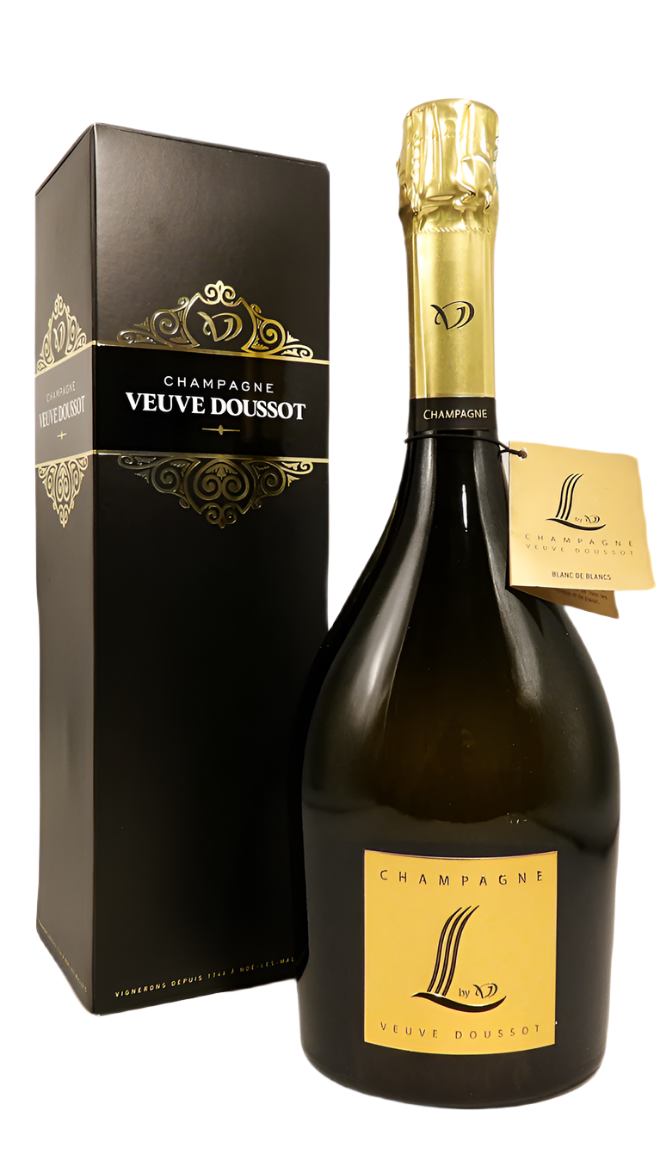
For a more prestigious pick, the Champagne Gran Cuvée Blanc de Blancs by Marie Clugny is a 100% Chardonnay from the Côte de Blancs, with a base year of 2020, a 20% perpetual reserve and a disgorgement date of 13-07-2023. It is a numbered bottle, priced at $89.00, and its dated disgorgement makes it easier to track its age.
Both bottles sit in the same collection, so you can compare them directly:
| Bottle | Producer | Price | Best For |
|---|---|---|---|
| Champagne Gran Cuvée Blanc de Blancs | Marie Clugny | $89.00 | Numbered, dated collector pick |
| Champagne L | Veuve Doussot | $69.00 | Highly rated mid-range bottle |
| Champagne Brut Tradition | Veuve Doussot | $39.99 | Entry point to the producer |
| Champagne Sélection Brut 375 ML | Veuve Doussot | $23.99 | Smaller format for tasting |
Price
Best for: collectors who want a numbered, dated bottle from a single Chardonnay village. Skip if: you are buying purely as an investment and need a rare, limited-release bottle at auction value.
Buying Old Champagne Bottles and Checking Their Value and Condition
Old champagne bottles need more checking than new ones. Look at the cork and capsule first. Check the bottling and disgorgement dates on the label or the back, since these tell you how long the wine has been aged on its lees.
For provenance, ask the seller where the bottle has been kept and whether it has moved between cellars. Our guide to wine provenance checking for French bottles explains how to verify source, storage and records before you buy a bottle you plan to hold.
Price is harder to judge than condition. Compare the price against the producer's current retail price and against the bottle's known rarity, not against the label alone. For a deeper look at what separates a fine vintage from an ordinary one, our guide to vintage champagne buying covers the criteria that matter most.
Frequently Asked Questions
Which Champagne is the most rare?
Rarity in Champagne usually comes from a limited production run, a prestige cuvee from a small grower, or a single-vintage release with a short disgorgement window. In our collection, the Champagne Gran Cuvee Blanc de Blancs, Brut by Marie Clugny is a 100% Chardonnay from the Cote de Blancs, base year 2020, with 20% perpetual reserve, 5 g/l dosage, a disgorgement date of 13-07-2023, and numbered bottles.
Are old bottles of Champagne worth anything?
Some are, but age alone does not create value. Most Champagne is made to be drunk within a few years, so an old bottle is worth money mainly when it comes from a sought-after producer, a notable vintage, and has been stored in good conditions with an intact label, capsule and cork. Check the disgorgement date and storage history before paying a premium for any bottle claimed to be old.
How should rare Champagne be stored?
Store bottles lying on their side in a cool, dark, vibration-free place with stable temperature and humidity, away from direct light and strong odours. Keeping the cork moist is what preserves it, so a horizontal position matters. Avoid temperature swings, which can damage the seal and affect the wine over time.
